Process
Segers, who worked in the 1500's, is one of my artistic heroes. He's an artist's artist. Most museum goers wouldn't recognize his name, but etchers go gaga over the rich effects he achieved by printing multiple layers of color onto his paper before he printed the final image layer on top.
As a digital imaging afficionado, I really dig the layering. For those of you who don't do a lot of Photoshop, making layers and filling them with color and texture is one of the deep pleasures of the medium.
I think there is another aspects of Segers work that I feel connected to as well. He loved landscape, real, imaginary, and combinations of the two. I Feel more at home and happy out in the landscape than anywhere else. This has been true for me since I can remember.
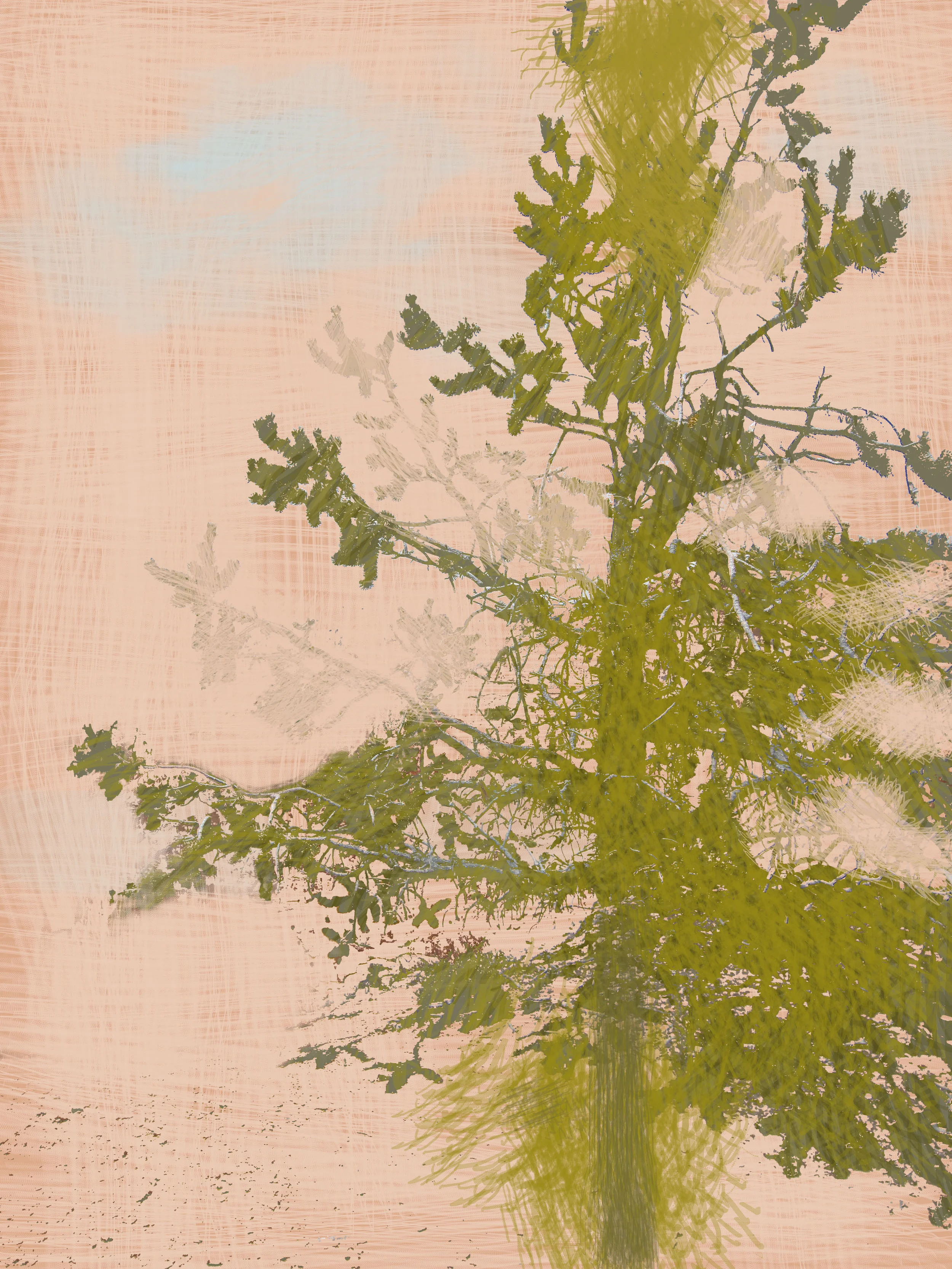
hese prints all began in the out of doors, in Glacier or Banff or Monument Valley. After walking and taking digital photos during the summer months, I go back into my studio in the cold New England winter. I use Photoshop, adding layers of colors and textures suggested to me by some of Seger's prints from 500 years ago. I work with digital brushes that I customize to act like etching tools. The color is an interesting problem. There are actually two versions of each color that I have to take into account, the on screen color and the printed version that comes out of the Epson.
My original photograph is buried in this process. Usually I like this. There are so many photographs in our world, particularly of the snapshot variety. A more painterly approach feels more personal and more creative.
Hercules Segers, who worked in the 1500's, is one of my artistic heroes. He's an artist's artist. Most museum goers wouldn't recognize his name, but etchers go gaga over the rich effects he achieved by printing multiple layers of color onto his paper before he printed the final image layer on top.
As a digital imaging afficionado, I really dig the layering. For those of you who don't do a lot of Photoshop, making layers and filling them with color and texture is one of the deep pleasures of the medium.
I think there is another aspects of Segers work that I feel connected to as well. He loved landscape, real, imaginary, and combinations of the two. I Feel more at home and happy out in the landscape than anywhere else. This has been true for me since I can remember.
hese prints all began in the out of doors, in Glacier or Banff or Monument Valley. After walking and taking digital photos during the summer months, I go back into my studio in the cold New England winter. I use Photoshop, adding layers of colors and textures suggested to me by some of Seger's prints from 500 years ago. I work with digital brushes that I customize to act like etching tools. The color is an interesting problem. There are actually two versions of each color that I have to take into account, the on screen color and the printed version that comes out of the Epson.
My original photograph is buried in this process. Usually I like this. There are so many photographs in our world, particularly of the snapshot variety. A more painterly approach feels more personal and more creative.
Process
My process is fluid, moving back and forth between media. For example, on a drawing trip to Utah, I camped along the Colorado River and made some small format pastel drawings and took photographs. Back in the print studio, these became large, 4 panel monotypes (90 in wide x 40 in high.) I drew on top of the prints with graphite and pastel and then photographed them I pulled the digital images into Photoshop and painted on them. The resulting digital output is a source for some large woodcuts I am currently carving.


Commodo cursus magna, vel scelerisque nisl consectetur et. Donec id elit non mi porta gravida at eget metus.